
That June in 2000 — An Evening of Barva and Des in Memory of Pandit Anandrao Limaye
That June in 2000 — An Evening of Barva and Des in Memory of Pandit Anandrao Limaye
About the Program
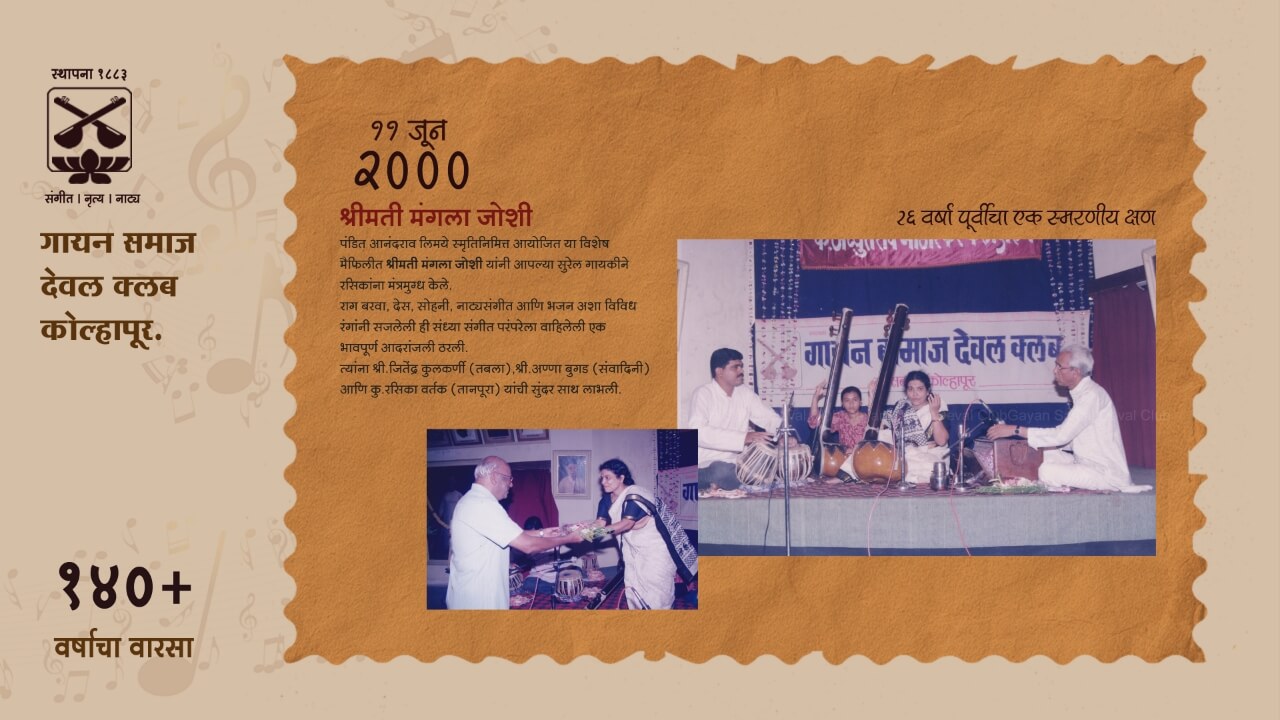
On the evening of 11 June 2000, the Deval Club Auditorium in Kolhapur gathered its listeners for a concert held in a spirit of remembrance. The occasion was a memorial tribute to the late Pandit Anandrao Limaye, a name held in deep regard within the musical life of the city. The monsoon weeks had just begun, and the intimate hall carried that particular stillness that settles over a room when an audience arrives not merely for entertainment but to honour a musical lineage through the act of listening. It was a fitting evening for vocal music — unhurried, reflective, and rooted in devotion to craft.
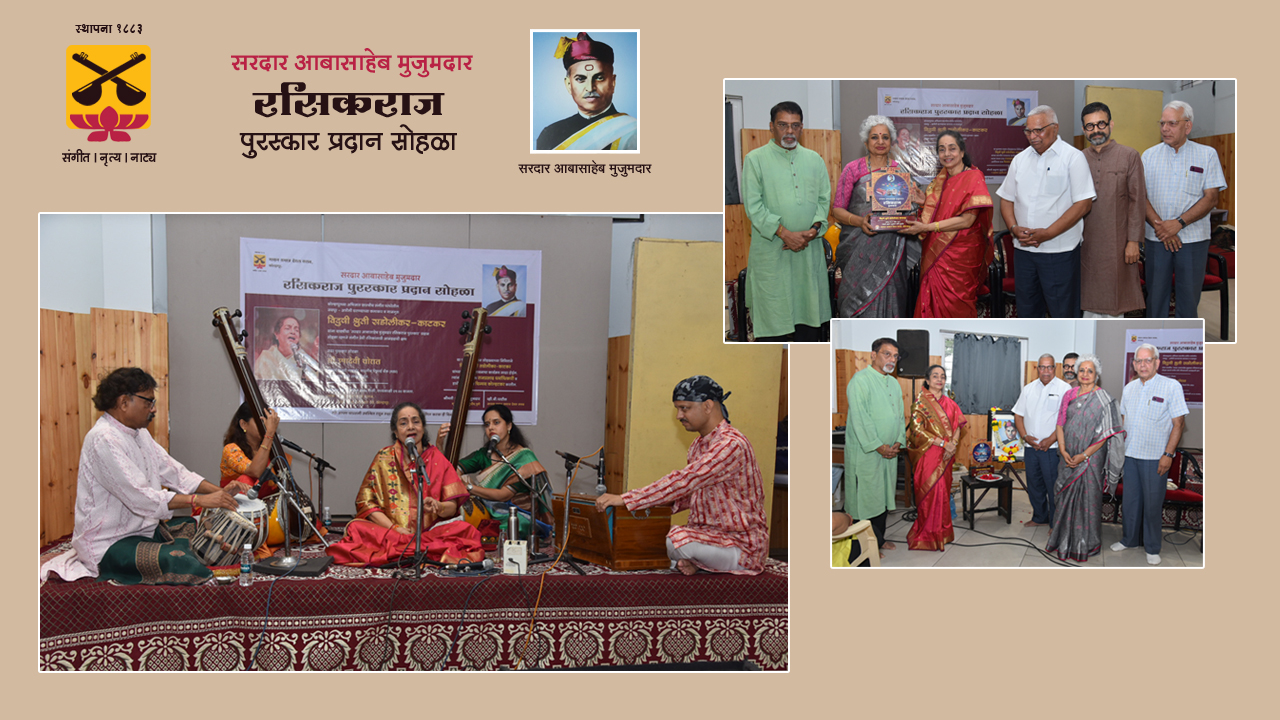
Srimati Mangala Joshi, the evening’s principal artist, opened with Raga Barva, a raga whose brooding, deliberate phrases suited the memorial tenor of the programme. She followed with Raga Des, shifting the palette toward its gentler, late-evening warmth, before presenting a selection of Natyasangeet that acknowledged the broader Maharashtrian musical tradition. The recital then moved to Raga Sohani, whose delicate, post-midnight character Srimati Joshi rendered with careful restraint, and closed with a bhajan that drew the evening toward a quiet devotional resolution. She was joined by Shree. Jitendra Kulkarni on tabla, whose accompaniment maintained a measured, attentive presence throughout, and Shree. Anna Bugad on harmonium, whose phrasing followed the vocalist with a close, unhurried sympathy. Miss Rasika Vartak provided the sustaining voice of the tanpura, anchoring the recital in its tonal centre.
Twenty-five years on, this concert survives in the Deval Club archive as a record of how Kolhapur’s musical community has long chosen to honour its departed teachers — not with speeches alone, but with the music itself. The memorial for Pandit Anandrao Limaye was not a grand festival but a single evening of careful, considered singing, and it is precisely this modesty that gives it weight. For those who return to the Deval Club today, the entry is a reminder that the truest tribute to a musician is the unbroken act of performance — one voice carrying forward what another voice once opened.
२००० चा तो जून — पंडित आनंदराव लिमये स्मृतिनिमित्त बरवा आणि देस यांची संध्याकाळ
११ जून २००० रोजी कोल्हापुरातील देवल क्लब सभागृहात एका स्मृती-मैफिलीसाठी रसिक एकत्र आले. हा कार्यक्रम स्वर्गीय पंडित आनंदराव लिमये यांच्या स्मृतिप्रीत्यर्थ आयोजित करण्यात आला होता — कोल्हापूरच्या संगीत परंपरेत ज्यांचे नाव आदराने घेतले जाते असे व्यक्तिमत्त्व. पावसाळ्याचे दिवस नुकतेच सुरू झाले होते, आणि सभागृहात एक विशेष शांतता भरून राहिली होती — केवळ मनोरंजनासाठी नव्हे, तर श्रवणाच्या माध्यमातून एका संगीत परंपरेला वंदन करण्यासाठी आलेल्या श्रोत्यांची ती शांतता होती.
श्रीमती मंगला जोशी यांनी मैफिलीची सुरुवात राग बरवा या गंभीर आणि विचारपूर्ण स्वरांच्या रागाने केली, जो स्मृतिसभेच्या भावनेला अनुरूप होता. त्यानंतर त्यांनी राग देस सादर केला, ज्याच्या सायंकालीन मृदू रंगांनी वातावरणात एक वेगळी उब निर्माण केली. पुढे त्यांनी नाट्यसंगीताची निवडक रचना सादर करून महाराष्ट्रीय संगीत परंपरेला अभिवादन केले. मैफिलीत राग सोहनी या नाजूक रागाची मांडणी त्यांनी संयमपूर्ण सादरीकरणातून केली, आणि शेवटी भजनाने संध्याकाळ भक्तिरसात विसावली. त्यांना श्री. जितेंद्र कुलकर्णी यांचा तबला लाभला, ज्यांची साथ संपूर्ण मैफिलीत संयमित आणि सजग होती, तसेच श्री. अण्णा बुगड यांची संवादिनी लाभली, ज्यांचे स्वर गायिकेच्या स्वरांशी एका सहज समरसतेने चालत होते. कु. रसिका वर्तक यांनी तानपुऱ्याचा आधार देत मैफिलीला स्वरांच्या केंद्रबिंदूशी जोडून ठेवले.
पंचवीस वर्षांनंतरही ही मैफिल देवल क्लबच्या संग्रहात एक नोंद म्हणून टिकून आहे — कोल्हापूरच्या संगीतप्रेमी समाजाने आपल्या दिवंगत गुरूंना कशा प्रकारे श्रद्धांजली वाहिली याची साक्ष. पंडित आनंदराव लिमये यांच्या स्मृतिप्रीत्यर्थचा हा कार्यक्रम कोणता भव्य महोत्सव नव्हता, तर एका विचारपूर्ण गायनाची संध्याकाळ होती — आणि हीच साधेपणाची गुणवत्ता त्याला कालातीत महत्त्व देते. आज देवल क्लबच्या उंबरठ्यावर येणाऱ्या रसिकांसाठी ही नोंद एक स्मरण आहे — संगीतकाराला वाहिलेली खरी श्रद्धांजली म्हणजे गायनाची अखंड परंपरा, एका स्वराने उघडलेले दार दुसऱ्या स्वराने पुढे नेणे.